

Tibet
Attested 1000 CE – 1960 CE
Ethno-cultural region in Asia
Wikipedia
The opening of the article, and a way into the rest of it without leaving the site.
Tibet on Wikipedia.
From Wikipedia, available under CC BY-SA 4.0.
How these dates were made
Why this bar's edges are floors, not a founding and a fall.
The atlas draws the world at 19 moments in time, not continuously. This bar runs from the first snapshot in which Tibet appears to the last, so both edges are floors — the earliest and latest years it is attested, not a founding and a dissolution.
Elsewhere in South Asia at the time
Records whose own span overlaps this one, found by the same test the canvas draws with. The bar under each card is where it sits inside this one.
.jpeg/500px-Taj_Mahal_(Edited).jpeg)
Landmark · South Asia
Taj Mahal
1632 CE – still standingPolity · South Asia
Hindu kingdoms
Attested 500 BCE – 1715 CEConflict · South Asia
Mughal Conquests of India
1526 CE – 1707 CE_(cropped).jpg/500px-Wide_angle_of_Galigopuram_of_Virupaksha_Temple%2C_Hampi_(04)_(cropped).jpg)
Landmark · South Asia
Hampi
1336 CE – 1565 CE
Polity · South Asia
India
Attested 1783 CE – 2026 CEConflict · South Asia
Anglo-Maratha Wars
1775 CE – 1818 CE
Landmark · South Asia
Anuradhapura
500 BCE – 1017 CE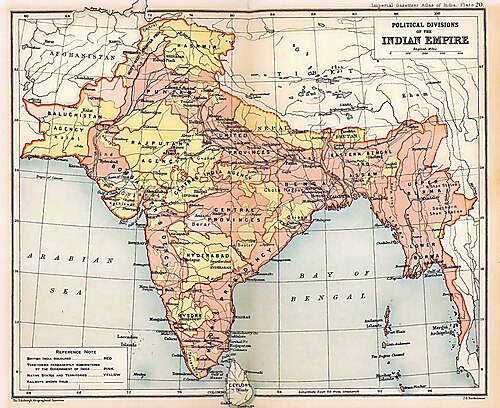
Polity · South Asia
British Raj
1858 CE – 1947 CEDated moments inside this span
Events the timeline places between 1000 CE and 1960 CE.
And in the rest of the world
Records running through the same years, on the other side of the map.
Image credits6 pictures from Wikimedia Commons
- TibetUniversity of Texas Libraries · CC BY-SA 3.0
- Taj MahalYann; edited by Jim Carter · CC BY-SA 4.0
- HampiiMahesh · CC BY-SA 4.0
- Flag of IndiaGovernment of India · Public domain
- AnuradhapuraThisaru Tharuka · CC BY-SA 4.0
- British RajEdinburgh Geographical Institute; J. G. Bartholomew and Sons. · Public domain

.jpeg)
_(cropped).jpg)


