

Wikipedia
The opening of the article, and a way into the rest of it without leaving the site.
Heruli on Wikipedia.
From Wikipedia, available under CC BY-SA 4.0.
How these dates were made
Why this bar's edges are floors, not a founding and a fall.
The atlas draws the world at 2 moments in time, not continuously. This bar runs from the first snapshot in which Heruli appears to the last, so both edges are floors — the earliest and latest years it is attested, not a founding and a dissolution.
Elsewhere in Europe at the time
Records whose own span overlaps this one, found by the same test the canvas draws with. The bar under each card is where it sits inside this one.
.jpg/500px-Philips_Galle%2C_Dianatemplet_i_Efesos%2C_1572%2C_KKSgb10001-5%2C_Statens_Museum_for_Kunst_(cropped).jpg)
Landmark · Europe
Temple of Artemis at Ephesus
550 BCE – 262 CEPolity · Europe
Boihaenum
Attested 1 BCE – 200 CE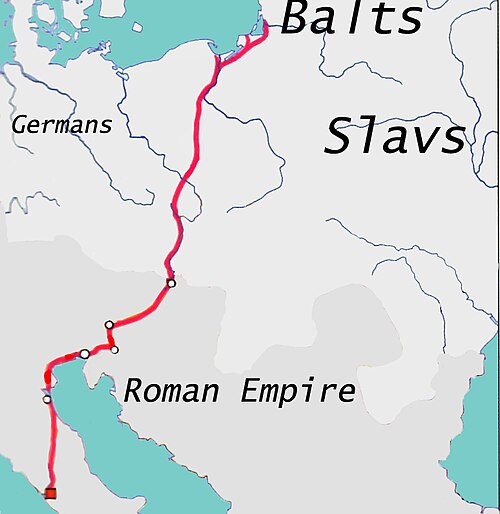
Trade route · Europe
Amber Road
1000 BCE – 400 CE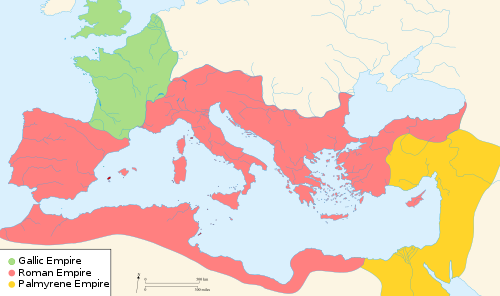
Conflict · Europe
Crisis of the Third Century
235 CE – 284 CE_-_Turkey_-_10_(5747249729).jpg/500px-Acropolis_-_Bergama_(Pergamon)_-_Turkey_-_10_(5747249729).jpg)
Landmark · Europe
Pergamon
300 BCE – 200 CE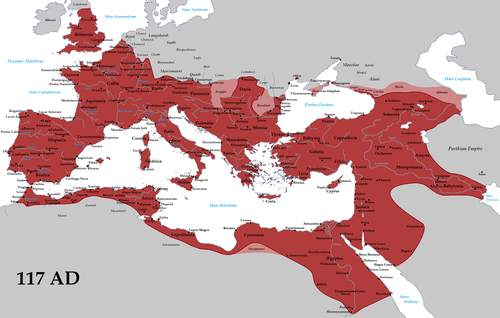
Polity · Europe
Roman Empire
26 BCE – 395 CETrade route · Europe
Roman Mediterranean Trade
27 BCE – 476 CEConflict · Europe
Sassanid-Roman Wars of the 3rd Century
260 CE – 298 CEDated moments inside this span
Events the timeline places between 200 CE and 300 CE.
And in the rest of the world
Records running through the same years, on the other side of the map.
Image credits6 pictures from Wikimedia Commons
- HeruliUser:Andrein · CC BY-SA 3.0
- Temple of ArtemisPhilip Galle · Public domain
- Amber RoadBearas · CC BY-SA 3.0
- Map of Ancient Rome 271 ADBlank map of South Europe and North Africa.svg : historicair 23:27, 8 August 2007 (UTC) · CC BY-SA 3.0
- PergamonAdam Jones from Kelowna, BC, Canada · CC BY-SA 2.0
- Roman EmpireTataryn · CC BY-SA 3.0

.jpg)


_-_Turkey_-_10_(5747249729).jpg)
