

Sekigahara Campaign
1600 CE – 1615 CE · 15 years
The decisive battle of Sekigahara unified Japan under Tokugawa rule, ending the Sengoku period. The subsequent siege of Osaka Castle eliminated the last Toyotomi resistance and ushered in 250 years of peace.
Wikipedia
The opening of the article, and a way into the rest of it without leaving the site.
Sekigahara Campaign on Wikipedia.
From Wikipedia, available under CC BY-SA 4.0.
Belligerents
The main peoples, kingdoms and states involved.
- Eastern Army (Tokugawa Ieyasu)
- Western Army (Ishida Mitsunari)
Key moments
Defining events in the Sekigahara Campaign.
- 1600 Battle of Sekigahara
- 1614 Winter Siege of Osaka
- 1615 Summer Siege of Osaka
Elsewhere in East Asia at the time
Records whose own span overlaps this one, found by the same test the canvas draws with. The bar under each card is where it sits inside this one.
Polity · East Asia
Ming Chinese Empire
Attested 1500 CE – 1600 CE
Landmark · East Asia
Thiên Mụ Pagoda
1601 CE – still standing
Trade route · East Asia
Tea Horse Road
700 CE – 1950 CEConflict · East Asia
Satsuma Invasion of Ryukyu
1609 CE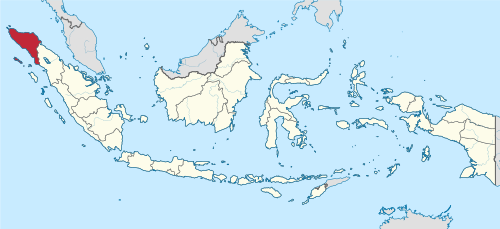
Polity · East Asia
Aceh
Attested 1279 CE – 1600 CE
Landmark · East Asia
Yakushima
3000 BCE – still standingTrade route · East Asia
Manila Galleon Trade
1565 CE – 1815 CEConflict · East Asia
Sengoku Period (Japanese Warring States)
1467 CE – 1615 CEDated moments inside this span
Events the timeline places between 1600 CE and 1615 CE.
And in the rest of the world
Records running through the same years, on the other side of the map.
Image credits5 pictures from Wikimedia Commons
- Sekigahara CampaignAlvin Lee · CC BY-SA 4.0
- Thiên Mụ TempleLưu Ly · Public domain
- Tea Horse RoadRedgeographics · CC BY-SA 4.0
- Aceh in IndonesiaTUBS · CC BY-SA 3.0
- YakushimaNASA · Public domain


