
How these dates were made
Why this bar's edges are floors, not a founding and a fall.
The atlas draws the world at 8 moments in time, not continuously. This bar runs from the first snapshot in which Sambian-Nothangian culture appears to the last, so both edges are floors — the earliest and latest years it is attested, not a founding and a dissolution.
Elsewhere in Europe at the time
Records whose own span overlaps this one, found by the same test the canvas draws with. The bar under each card is where it sits inside this one.

Landmark · Europe
Colosseum
80 CE – still standing
Polity · Europe
Greek city-states
Attested 1500 BCE – 300 BCETrade route · Europe
Roman Mediterranean Trade
27 BCE – 476 CE
Conflict · Europe
Greco-Persian Wars
499 BCE – 449 BCE
Landmark · Europe
Statue of Zeus at Olympia
435 BCE – 426 CE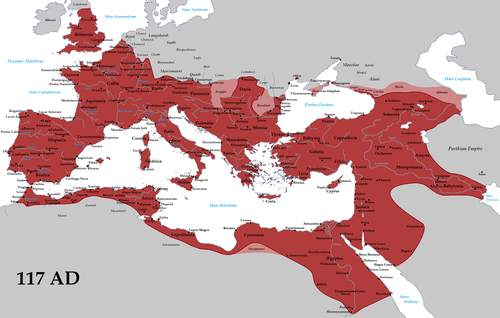
Polity · Europe
Roman Empire
26 BCE – 395 CETrade route · Europe
Roman Western Trade
27 BCE – 476 CE
Conflict · Europe
Conquests of Alexander the Great
334 BCE – 323 BCEDated moments inside this span
Events the timeline places between 500 BCE and 100 CE.
And in the rest of the world
Records running through the same years, on the other side of the map.
Image credits6 pictures from Wikimedia Commons
- ColosseumFeaturedPics · CC BY-SA 4.0
- PolisA.Savin · CC BY-SA 3.0
- Greco-Persian Warshttps://commons.wikimedia.org/wiki/File:Greek-Persian_duel.jpg · CC0
- Statue of Zeus at OlympiaQuatremère de Quincy · Public domain
- Roman EmpireTataryn · CC BY-SA 3.0
- Wars of Alexander the GreatThe Guardian (DEA/G Nimatallah/De Agostini/Getty Images) · Public domain


