

Pamukkale
3000 BCE – still standing
White travertine terraces of mineral-rich thermal waters cascading down a hillside in Turkey
Wikipedia
The opening of the article, and a way into the rest of it without leaving the site.
Pamukkale on Wikipedia.
From Wikipedia, available under CC BY-SA 4.0.
Who held this ground
Borders from dated snapshots, up to a century apart; precision varies.
Reconstruction
- No border recorded here in this snapshot (3000 BCE)
- Anatolian tribes (2000 BCE) Border precision: Approximate
- Phrygians (1500 BCE–700 BCE) Border precision: Approximate
- Achaemenid Empire (500 BCE–400 BCE) Border precision: Approximate
- Empire of Alexander (323 BCE) Border precision: Approximate
- Kingdom of Antigonus (300 BCE) Border precision: Approximate
- Seleucid Kingdom (200 BCE) Border precision: Approximate
- Roman Republic (100 BCE) Border precision: Approximate
- Roman Empire (1 BCE–200 CE) Border precision: Approximate
- Rome (Diocletianus) (300 CE) Border precision: Approximate
- Eastern Roman Empire (400 CE–700 CE) Border precision: Approximate
- Byzantine Empire (800 CE–1300 CE) Border precision: Approximate
- Ottoman Empire (1400 CE–1914 CE) Border precision: Approximate
- Italy (1920 CE) Border precision: Defined
- Turkey (1930 CE–2026 CE) Border precision: Defined
- Defined
- Approximate
Elsewhere in Europe at the time
Records whose own span overlaps this one, found by the same test the canvas draws with. The bar under each card is where it sits inside this one.

Landmark · Europe
Colosseum
80 CE – still standing
Polity · Europe
Ottoman Empire
1299 CE – 1922 CE
Conflict · Europe
World War I
1914 CE – 1918 CE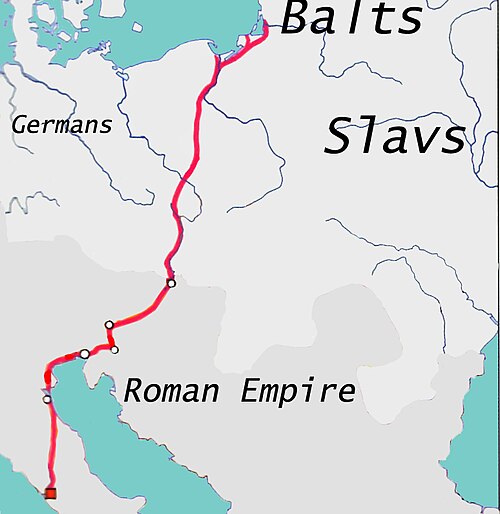
Trade route · Europe
Amber Road
1000 BCE – 400 CE
Landmark · Europe
Temple of Artemis at Ephesus
550 BCE – 262 CE
Polity · Europe
Holy Roman Empire
962 CE – 1806 CE
Conflict · Europe
World War II
1939 CE – 1945 CETrade route · Europe
Roman Mediterranean Trade
27 BCE – 476 CEDated moments inside this span
Events the timeline places between 3000 BCE and 2026 CE.
And in the rest of the world
Records running through the same years, on the other side of the map.
Image credits 8 pictures from Wikimedia Commons
- Pamukkale Biologg · CC BY-SA 4.0
- Colosseum FeaturedPics · CC BY-SA 4.0
- Flag of the Ottoman Empire (1844–1922) User:Orwellianist · Public domain
- World War I Collection DocAnciens/docpix.fr · Public domain
- Amber Road Bearas · CC BY-SA 3.0
- Temple of Artemis Philip Galle · Public domain
- Banner of the Holy Roman Emperor with haloes (1430-1806) David Liuzzo, eagle by N3MO · CC BY-SA 3.0
- World War II Richard Opitz · CC BY-SA 3.0 de


