

Lelu Ruins
1250 CE – 1600 CE · 350 years
Basalt-walled royal compound on Kosrae, Micronesia, a rival to Nan Madol with massive walls enclosing sacred royal residences
Wikipedia
The opening of the article, and a way into the rest of it without leaving the site.
Leluh archaeological site on Wikipedia.
From Wikipedia, available under CC BY-SA 4.0.
Who held this ground
Borders from dated snapshots, up to a century apart; precision varies.
Reconstruction
- Before it was built (3000 BCE–1200 CE)
- No border recorded here in this snapshot (1279 CE–1930 CE)
- Empire of Japan (1938 CE) Border precision: Defined
- No border recorded here in this snapshot (1945 CE–2026 CE)
- Defined
Running at the same time
Records whose own span overlaps this one, found by the same test the canvas draws with. The bar under each card is where it sits inside this one.

Landmark
Mausoleum of Khoja Ahmed Yasawi
1389 CE – still standingTrade route
Silk Road Southern Branch
200 BCE – 1450 CEPolity
central Asian khanates
Attested 1530 CE – 1900 CE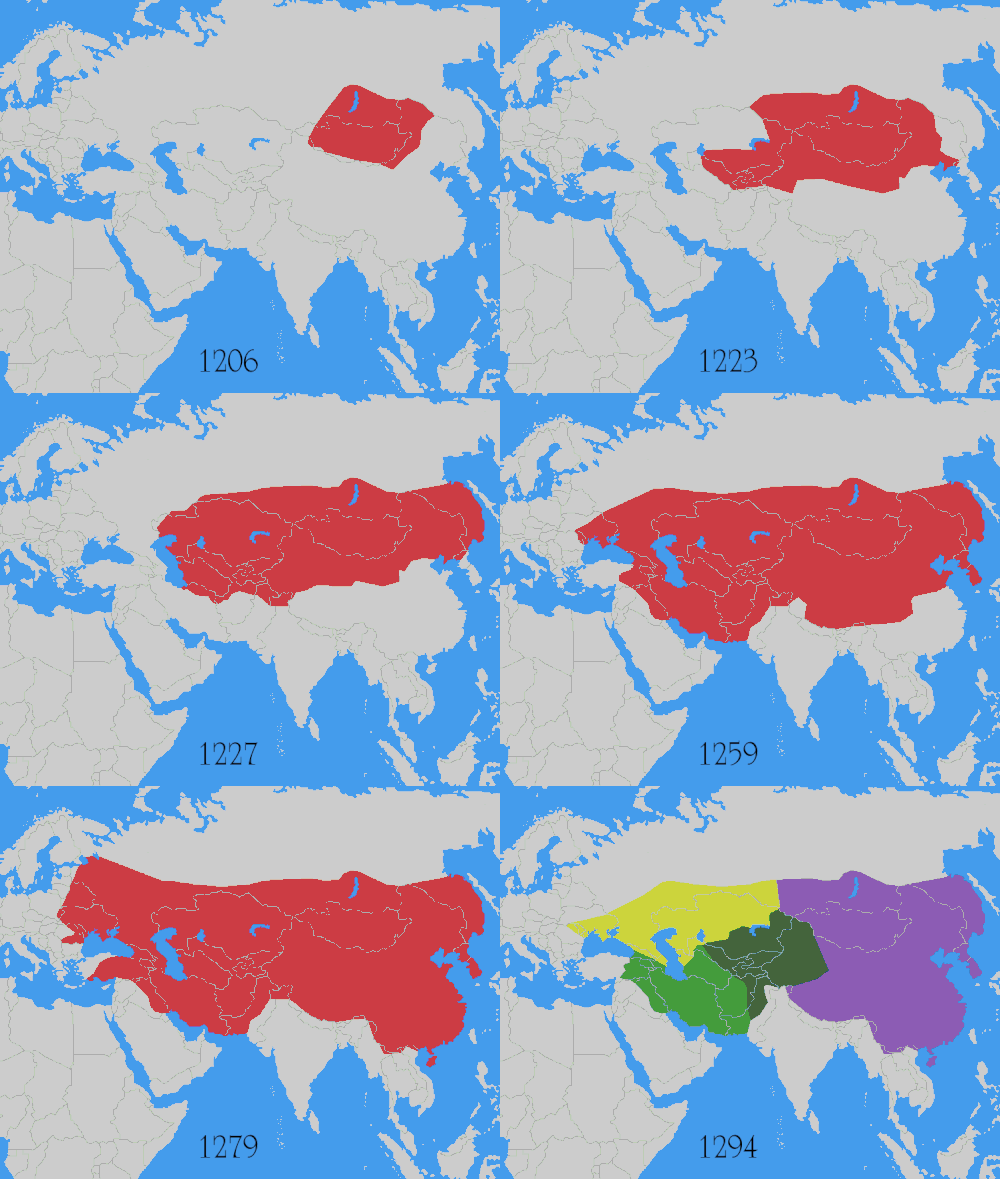
Conflict
Mongol Conquests
1206 CE – 1368 CEFigure · West Africa
Sundiata
1217 CE – 1255 CE
Landmark
Jiaohe Ruins
200 BCE – 1400 CETrade route
Manila Galleon Return Route
1565 CE – 1815 CE
Polity
Srivijaya Empire
650 CE – 1400 CEDated moments inside this span
Events the timeline places between 1250 CE and 1600 CE.
And in the rest of the world
Records running through the same years, on the other side of the map.
Image credits 5 pictures from Wikimedia Commons
- Leluh archaeological site Maloff1 · CC BY-SA 3.0
- Mausoleum of Khoja Ahmed Yasawi Petar Milošević · CC BY-SA 3.0
- Mongol conquests User:Astrokey44 · CC BY-SA 3.0
- Jiaohe ruins Colegota · CC BY-SA 2.5 es
- Srivijaya Empire Gunawan Kartapranata · CC BY-SA 3.0


