

Herculaneum
600 BCE – 79 CE · 679 years
Roman town buried by Vesuvius in 79 AD, with better-preserved organic materials and upper stories than Pompeii
Wikipedia
The opening of the article, and a way into the rest of it without leaving the site.
Herculaneum on Wikipedia.
From Wikipedia, available under CC BY-SA 4.0.
Who held this ground
Borders from dated snapshots, up to a century apart; precision varies.
Reconstruction
- Before it was built (3000 BCE–700 BCE)
- No border recorded here in this snapshot (500 BCE–2026 CE)
Elsewhere in Europe at the time
Records whose own span overlaps this one, found by the same test the canvas draws with. The bar under each card is where it sits inside this one.

Landmark · Europe
Temple of Artemis at Ephesus
550 BCE – 262 CE
Polity · Europe
Greek city-states
Attested 1500 BCE – 300 BCETrade route · Europe
Roman Mediterranean Trade
27 BCE – 476 CE
Conflict · Europe
Greco-Persian Wars
499 BCE – 449 BCE
Landmark · Europe
Statue of Zeus at Olympia
435 BCE – 426 CE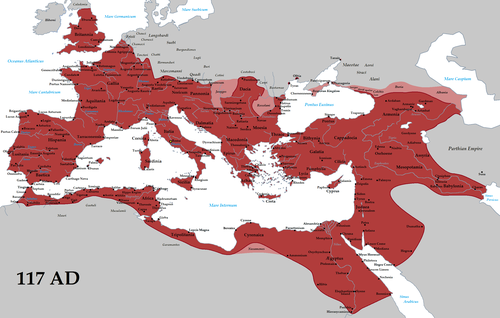
Polity · Europe
Roman Empire
26 BCE – 395 CETrade route · Europe
Roman Western Trade
27 BCE – 476 CE
Conflict · Europe
Conquests of Alexander the Great
334 BCE – 323 BCEDated moments inside this span
Events the timeline places between 600 BCE and 79 CE.
And in the rest of the world
Records running through the same years, on the other side of the map.
Image credits 7 pictures from Wikimedia Commons
- Herculaneum Diego Delso · CC BY-SA 4.0
- Temple of Artemis Philip Galle · Public domain
- Polis A.Savin · CC BY-SA 3.0
- Greco-Persian Wars https://commons.wikimedia.org/wiki/File:Greek-Persian_duel.jpg · CC0
- Statue of Zeus at Olympia Quatremère de Quincy · Public domain
- Roman Empire Tataryn · CC BY-SA 3.0
- Wars of Alexander the Great The Guardian (DEA/G Nimatallah/De Agostini/Getty Images) · Public domain


