
Illyrian Wars
229 BCE – 168 BCE · Three separate campaigns
The Illyrian Wars were three separate Roman campaigns across the Adriatic in 229–228, 219 and 168 BCE. Rome fought Teuta, Demetrius of Pharos and Gentius in turn. The date range covers a series of conflicts, rather than 61 years of continuous fighting.
Causes and outcome
First Illyrian War: 229–228 BCE
Polybius connects Rome’s intervention to attacks on Italian traders and the killing of a Roman envoy. Roman forces took coastal communities under their protection. Teuta’s settlement imposed tribute and restrictions on Illyrian ships sailing south of Lissus.
Second Illyrian War: 219 BCE
Demetrius of Pharos attacked cities under Roman protection and sailed beyond the treaty’s limit. Rome sent Lucius Aemilius, who captured Dimale and defeated him at Pharos. Demetrius escaped to the Macedonian king Philip.
Third Illyrian War: 168 BCE
Gentius sided with Perseus of Macedon during Rome’s Macedonian war. Lucius Anicius defeated him, and Gentius surrendered with his family. This was the final campaign in the series shown here.
Wikipedia
The opening of the article, and a way into the rest of it without leaving the site.
Illyrian Wars on Wikipedia.
From Wikipedia, available under CC BY-SA 4.0.
Belligerents
The main peoples, kingdoms and states involved.
- Roman Republic
- Illyrian kingdoms
Key moments
Defining events in the Illyrian Wars.
- 229-228 BC First Illyrian War
- 219 BC Battle of Pharos
- 168 BC Third Illyrian War
Elsewhere in Europe at the time
Records whose own span overlaps this one, found by the same test the canvas draws with. The bar under each card is where it sits inside this one.

Landmark · Europe
Colossus of Rhodes
282 BCE – 226 BCEPolity · Europe
minor states
Attested 200 BCE – 100 BCE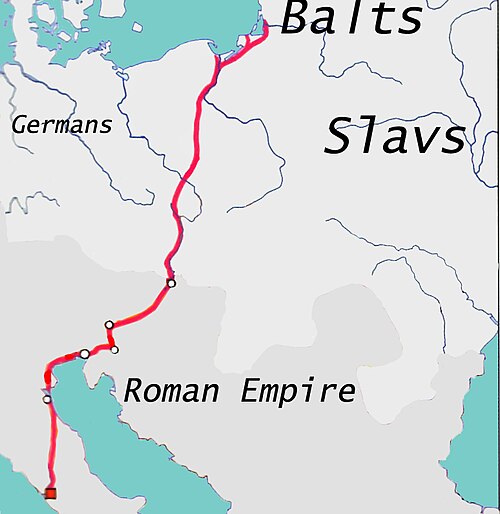
Trade route · Europe
Amber Road
1000 BCE – 400 CE
Conflict · Europe
Roman Conquest of Greece
214 BCE – 146 BCE
Landmark · Europe
Plitvice Lakes
3000 BCE – still standing
Polity · Europe
Pergamon
Founded 800 BCE · attested to 200 BCEConflict · Europe
Roman–Numidian Wars
206 BCE – 46 BCE
Landmark · Europe
Giant's Causeway
3000 BCE – still standingDated moments inside this span
Events the timeline places between 229 BCE and 168 BCE.
And in the rest of the world
Records running through the same years, on the other side of the map.
Image credits 6 pictures from Wikimedia Commons
- Colossus of Rhodes gravure sur bois de Sidney Barclay numérisée Google · Public domain
- Amber Road Bearas · CC BY-SA 3.0
- Greece in the Roman era Drawn by F. W. Putzger, A. Baldamus and E. Schwabe, uploaded to Wikimedia Commons by User… · CC BY-SA 4.0
- Plitvice Lakes National Park Zysko serhii · CC BY-SA 4.0
- Pergamon Adam Jones from Kelowna, BC, Canada · CC BY-SA 2.0
- Giant's Causeway code poet on flickr. · CC BY-SA 2.0


